The Early Days of Horse-Drawn Fire Brigades in North America
Courage on Four Hooves
In the late 19th and early 20th centuries, before roaring engines and flashing lights, fire brigades relied on the speed and strength of horses to rush to emergencies. The scene was dramatic — the sudden clanging of a fire bell, boots pounding on cobblestones, and then the powerful gallop of horses pulling gleaming wagons through the streets. These horse-drawn fire crews were not only an essential part of city life but also a beloved symbol of community protection.
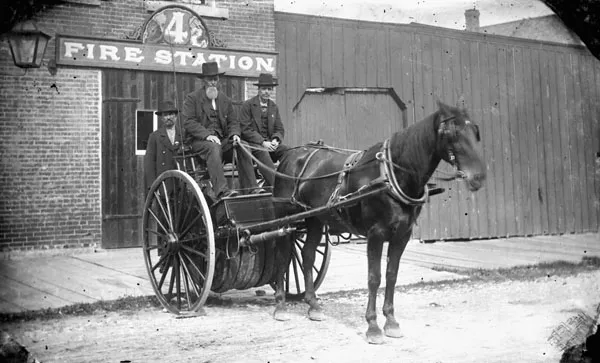
A citizen fire crew posing with a horse-drawn fire-wagon and fire hose reel, outside the No. 4 Fire Station. CC BY 2.0, Link
The image shows a proud group of local volunteers posing beside their fire wagon outside the No. 4 Fire Station, hoses neatly coiled and horses standing alert. It’s a rare glimpse into an era when firefighting was as much about teamwork with animals as with fellow humans.
When Every Second Counted
By the 1880s, cities like New York, Toronto, and Chicago were expanding rapidly, and so were the dangers of urban fires. Horse-drawn wagons could cut response times in half compared to hand-pulled equipment. Crews were known to keep their horses ready in special harness rigs that could be dropped into place in seconds when the alarm rang.
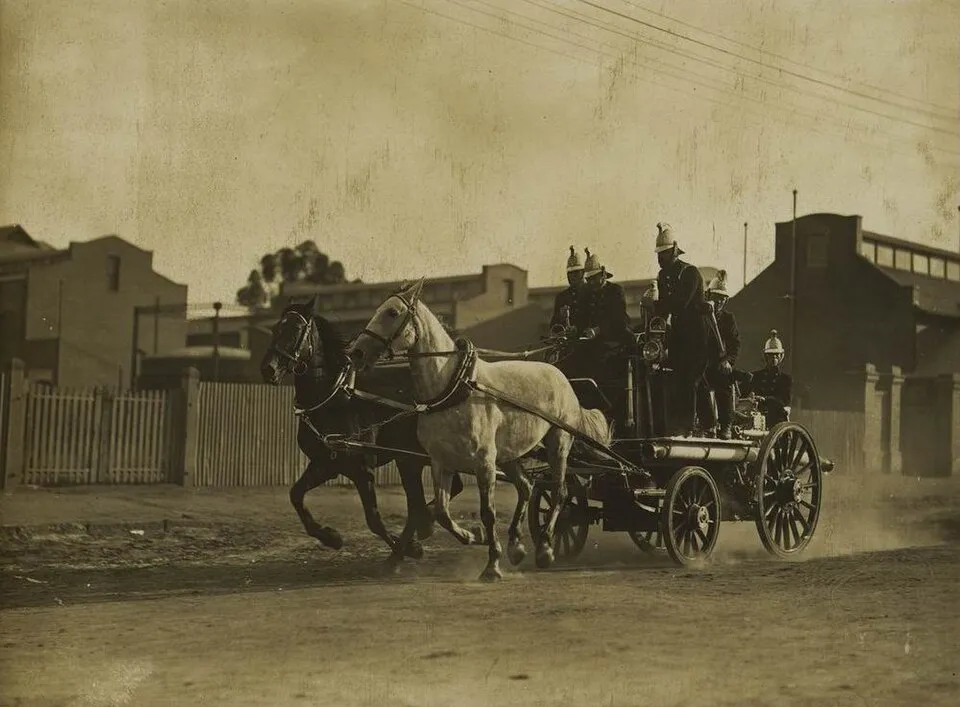
Horse-drawn fire equipment with polished brass fittings, 1880. License: CC BY 2.0, via Link
In this 1880 photograph, the wagon’s polished brass fittings gleam in the sun. The horses are lean and muscular, trained to remain calm until the exact moment they needed to surge forward into action.

Horse-drawn fire engine in snowy Dawson, Yukon. CC BY 2.0, via Link
Far from the big cities, towns like Dawson in the Yukon also relied on horse-drawn engines. The snowy setting in this photo reminds us that firefighting in the North required extra grit — and warm coats.
The Faces of the Brigade
Fire brigades weren’t just about speed — they were about camaraderie. Many crews became neighborhood legends, with each member known by name in the community. A chief could be as recognizable as the mayor, and the fire horses were local celebrities.
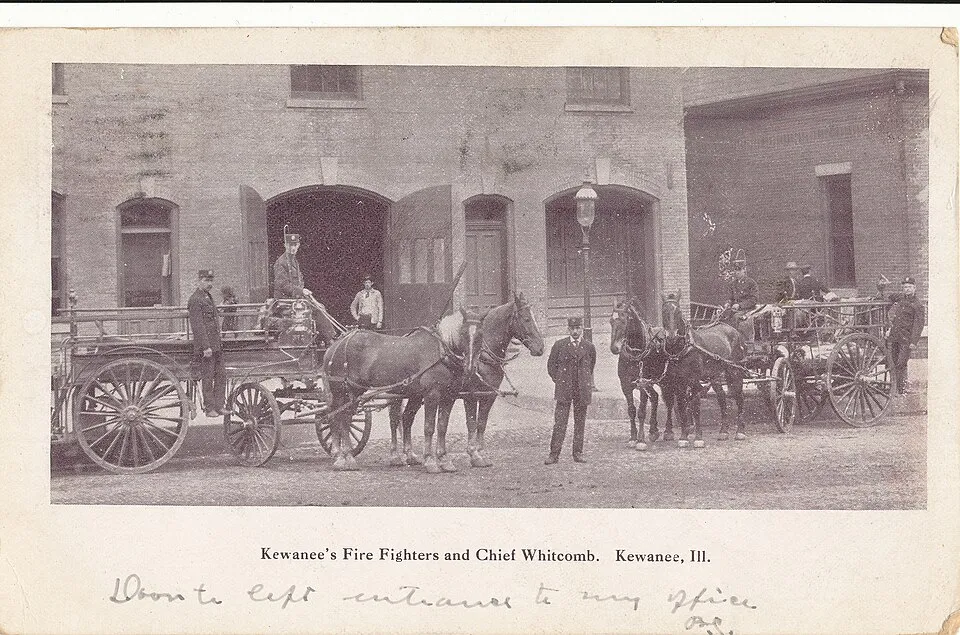
Kewanee Fire Fighters with Chief Whitcomb, 1906. CC BY 2.0, via Link
Here we see the Kewanee firefighters in 1906, lined up proudly with their chief. The wagon behind them is loaded with gear, ready for the next call.
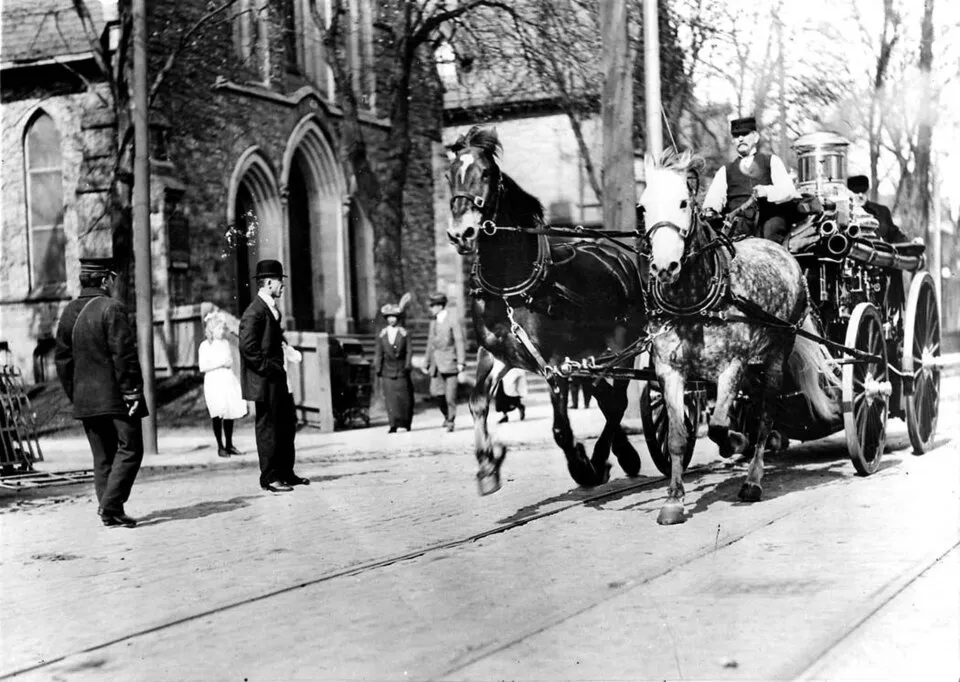
Horse-drawn fire wagon moving along Bloor Street in Toronto. Public Domain, via Wikimedia
In Toronto, the fire brigade made its way along Bloor Street with a full team of horses. Crowds often gathered to watch the wagons race past — the arrival of the brigade was an event in itself.
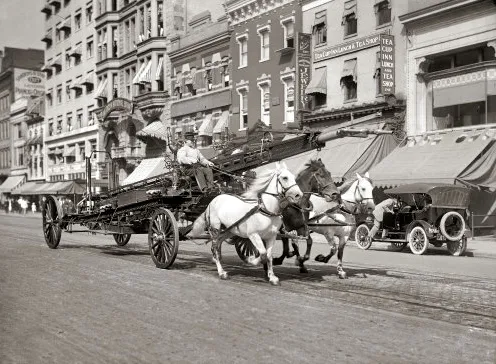
Horse-drawn fire truck traveling down F Street in Washington, D.C. Public Domain, via Wikimedia
Even in the U.S. capital, the sight of a horse-drawn truck charging down F Street was enough to stop traffic. The grandeur of the wagons matched the importance of their mission.
Innovation on the Move
Though horse-drawn firefighting equipment was romantic and iconic, technology was moving quickly. By the 1910s, motorized fire engines began replacing horse teams. Still, the transition was gradual, and in some areas, horses remained in service into the 1920s.
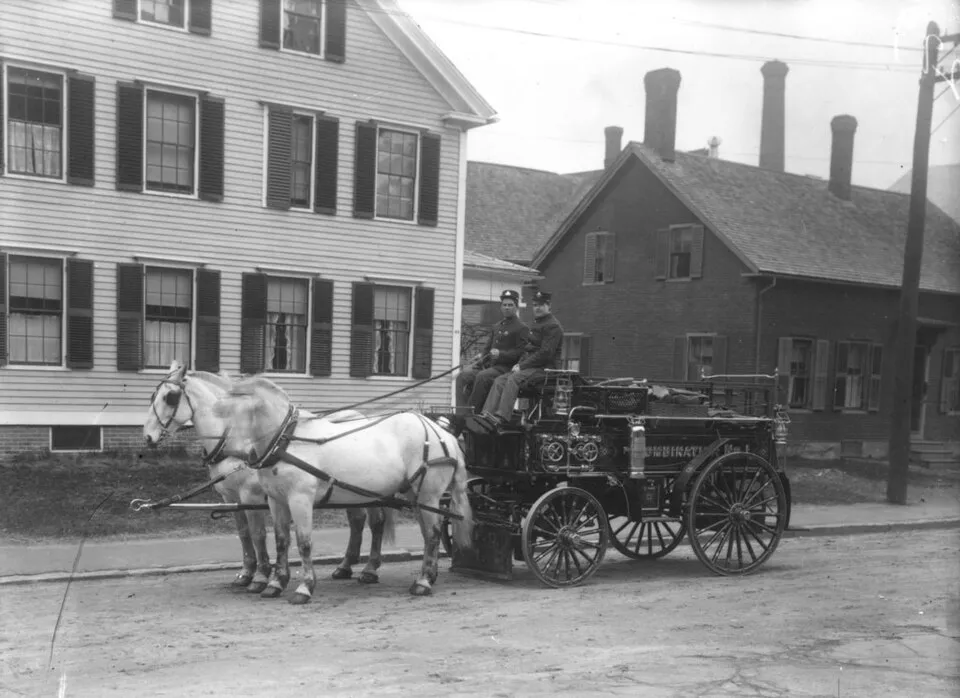
Ornate horse-drawn fire engine, early 1900s. Public Domain, via Wikimedia
The craftsmanship of these engines is striking. The ornate details and careful maintenance reflected the pride firefighters had in their work.
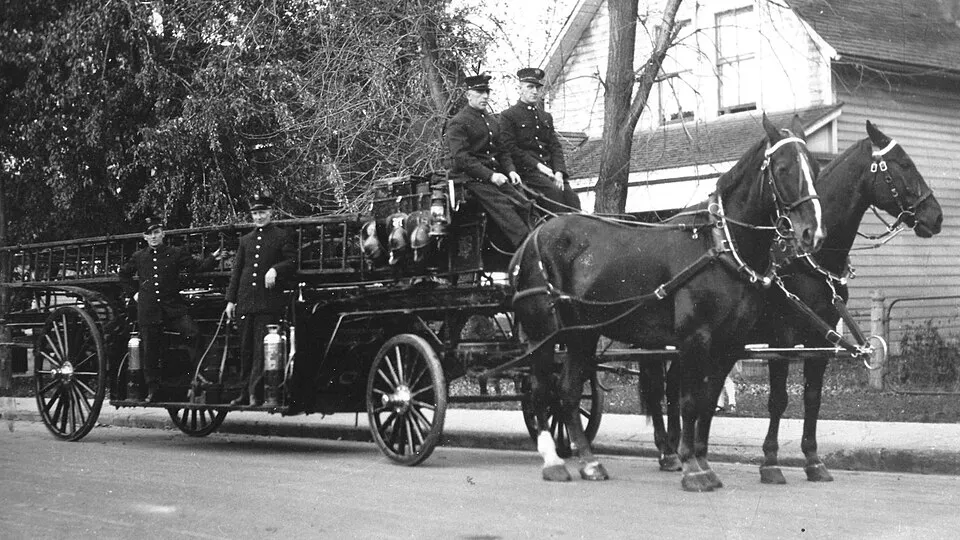
Ottawa Fire Department horse-drawn engine team, 1920. CC BY 2.0, via Wikimedia
In Ottawa, this 1920 photograph captures the last days of the horse brigade era. The team is perfectly lined up, the wagon immaculate, and the horses alert — soon to be replaced by motor power.
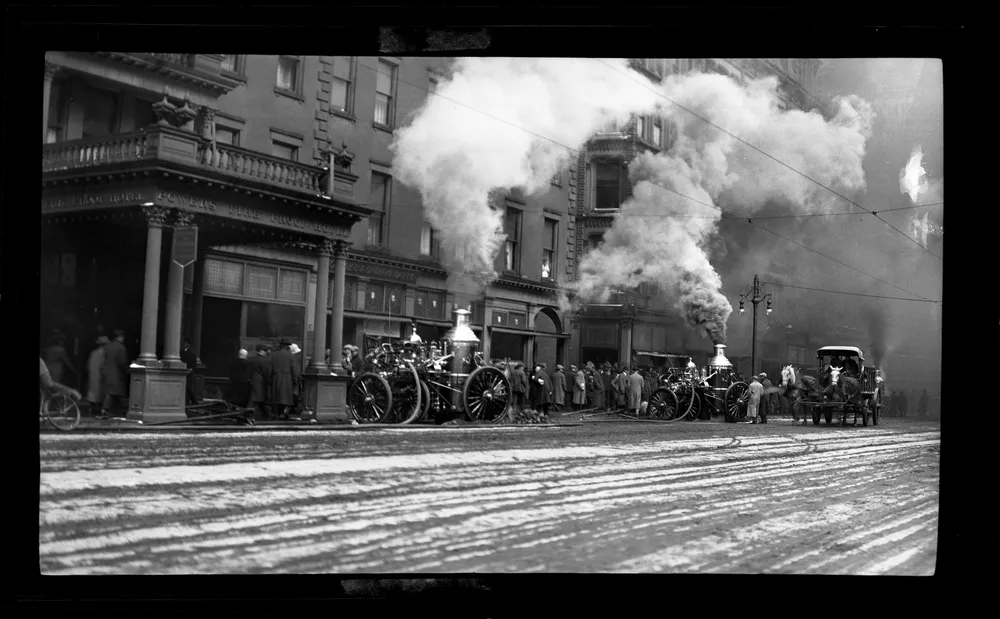
Fire wagons outside Powers Fire Proof Hotel, Rochester, 1890s. CC BY 2.0, via Wikimedia. This place today Google Maps
This image from Rochester, New York, shows several wagons waiting outside the Powers Fire Proof Hotel. The term “fire proof” was often more hopeful than true — even the safest buildings could be vulnerable.

.jpg)


.jpg)


.jpg)
.jpg)
.jpg)